
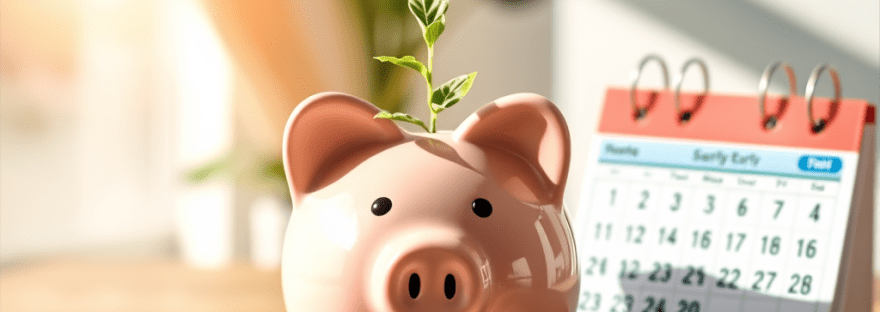
This year, Marlon and I have been on our self-improvement journey to look good on the outside, feel even better on the inside, and create better habits. One of the ways we’ve been improving is financially, and it has been quite a journey, even though we’re still in the early stages.
Now, by no means am I a financial adviser, but I’d love to share with you some of the things I have recently learned. Please feel free to do your own research and make the best financial decisions for you and your family. Let’s get into it!
1. Start saving for retirement ASAP!
Did you know that Yahoo! Finance reports that roughly 6 in 10 Americans are not on the right financial path to retirement? Did you also know that I didn’t know anything about retirement until last month? Don’t judge me, y’all! I don’t know if I thought money for retirement would just fall into my lap at any moment, but I 100% did not know that I should have been saving for it. I definitely didn’t know that it starts in your 20s (or at least as early as possible) until I attended an optional webinar about retirement through my employer. I immediately called my mom to pick her brain about how this works and set up my retirement account. My check is definitely smaller because of it, but I know that it’s an investment that I’ll benefit from in the long run.
2. Build up your savings account for rainy days (or seasons).
It makes total sense now that I know it, but I learned that everyone should have at least three months’ worth of living expenses saved up, especially in this economy! As we’re seeing with the government shutdown, anything can happen at any time, and you never know when or how long you may be down and out. Even if you have job security, it’s a good idea to save for emergencies and other unexpected hiccups that will inevitably come.
CNBC reports that 33% of Americans don’t have funds saved for emergencies, and those who do save for emergencies only have about $500 on average saved. Since everyone’s financial circumstances are different, it will, of course, be harder for some to save than others. So, while the recommendation is to contribute 10% of each check towards your savings, you should do whatever you can.
3. It’s scary, but test the waters in the stock market!
If you don’t invest in the stock market, don’t worry, you are not alone. According to the Federal Reserve Bank of Philadelphia, 57% of adults in a study have never invested in stocks because of a lack of income and a lack of knowledge. I am fortunate and blessed to say that we have invested, but there’s so much we don’t know about investing! Marlon and I made our first investment last year and gained about $50, and while we knew we still had more to learn, we felt more confident. That same year, we tried our hand at a second investment, and it was a dud. We lost about $550 (that’s not a typo, unfortunately); our confidence was shot, and we haven’t invested in anything since.
At first, it was out of fear and hesitation that the same thing would happen again. However, we got over that hump and are now trying to educate ourselves more and save more money before we invest again.
It is recommended to save an additional 10% of your check to go toward investments, but again, do what is best for you and your family. While you’re saving what you can, find trusted resources and soak up as much information as you can about the stock market. Read books, listen to podcasts, watch YouTube videos — do whatever you need to do to inform yourself.
Final Thoughts
I mentioned earlier that I was blessed to be able to save and invest, but more importantly, I’m privileged enough to do this as well. I would be remiss if I didn’t acknowledge that to be able to save for retirement, rainy days, and stocks is a privilege, one that I’m extremely grateful for. However, I would also be remiss if I didn’t reiterate the importance of saving what you can. Too many people think that $20 is nothing and isn’t worth saving, but I promise you that saving $20 each check is better than saving nothing. Within 6 months, you’ll have $240, which can come in handy in a pinch.
I also mentioned earlier that I’m still learning about financial literacy, so I hope to come back down the line with more things I’ve learned and updates about how stock investments are going for us. I’m anxious about our current economy, and one thing that will help me feel at least some sort of stability and preparedness is to build savings however I can.
Are you interested in learning about financial literacy? Have you already taken steps to become more financially literate? Let me know in the comments!

 Let's Flourish Together